
Are You Getting Enough Carotenoids?
How consuming these color compounds may increase your lifespan and improve your quality of life

At some point, somewhere, someone may have said that you should eat foods of many different colors. “Eating the rainbow,” it’s called. If so, you got some good advice. Dietary color diversity is a visual shorthand for carotenoids, phytochemicals that support good health and longevity. But you can’t expect a few strips of bell peppers in your fajitas to do much toward extending your lifespan. It matters that you get enough carotenoids, but not too much, as well as a sufficient variety thereof.
What are carotenoids?
Carotenoids are pigments. They occur mostly in plants and plant-like organisms, like algae and fungi, but also in certain bacteria. Even animals that primarily eat carotenoid-rich organisms acquire the associated pigmentation. Salmon, for example, derive their characteristic pink-to-red flesh coloring from astaxanthin, a carotenoid abundant in the algae eaten by their crustacean prey.[1]
Types of carotenoids
With more than 600 known types, carotenoids constitute a vast category of bioactive phytochemical compounds, but they generally fall into two categories:[2]
-
Carotenes: Composed of carbon and hydrogen. They’re the type of carotenoids you’ve probably heard of, specifically beta-carotene (like from carrots) and lycopene (like from tomatoes). But there are oh-so-many more — alpha-carotene, gamma-carotene, zeta-carotene, et cetera.
-
Xanthophylls: A similar chemical composition to carotenes, but with the addition of oxygen. The aforementioned astaxanthin is an example of a xanthophyll. So are lutein, zeaxanthin, and beta-cryptoxanthin.
Common dietary sources of carotenoids
Carotenoids are generally either orange–red (carotenes) or yellow (xanthophylls), so you might guess the sorts of foods that are particularly carotene-abundant:[3] [4] [5] [6]
-
Bright vegetables: carrots, squash/pumpkin, sweet potatoes, bell peppers, corn
-
Bright fruits: tomatoes, cantaloupe, watermelon, grapefruit, apricots, mangoes
- Bright proteins: eggs, salmon, trout, shrimp
They also appear in many verdant vegetables, such as broccoli, asparagus, brussels sprouts, and leafy greens (collards, kale, spinach, lettuce).
Why are carotenoids important?
In many source organisms, carotenoids both help to absorb sunlight for photosynthesis and protect the organism from the adverse effects of said light.[7] In humans who consume such and similar organisms, the carotenoids impart a different set of protective effects:
Eye health and immune function
Some carotenoids are vitamin A precursors, meaning that they convert to vitamin A in the body. Vitamin A is essential for many things, among which are supporting a strong immune system and maintaining good eyesight.[8] A few randomized, controlled trials are excellent cases in point. In 1990, for example, a study in children found that vitamin A treatment reduced morbidity and mortality in severe cases of measles,[9] and a 1993 study saw that vitamin A slowed the course of vision loss in retinitis pigmentosa.[10] More recently, and more to the point of carotenoids, increased dietary intake of two xanthophylls (lutein and zeaxanthin, which accumulate in the retina) has been shown to delay the progression of eye diseases such as age-related macular degeneration.[11]
Cognitive function
In 2022, an observational study published in Neurology saw that, after 26+ years of follow-up, subjects with higher serum levels of lutein, zeaxanthin, and beta-cryptoxanthin had a lower incidence of all-cause dementia.[12]
Another study — this one a randomized, double-blind, placebo-controlled study from 2011 — found that daily administration of the carotenoid astaxanthin in 12mg doses could “elevate the choroidal blood flow velocity,” suggesting the potential for improved memory performance and other cognitive tasks.[13] [14]
Antioxidant action
Oxidative stress is bad stuff. To put it simply, it’s closely linked to systemic inflammation and is believed to drive mechanisms that lead to cellular damage, rapid biological aging, and the onset of age-related diseases.[15]
So, xanthophylls to the rescue. Astaxanthin, in particular, has been the subject of considerable research for its antioxidant activity. A 2011 trial, for example, determined that 6–12mg/day doses could lower biomarkers of oxidative stress,[16] an outcome corroborated by a 2022 meta-analysis as well as in vitro studies on the subject.[17] [2]
Sleep health
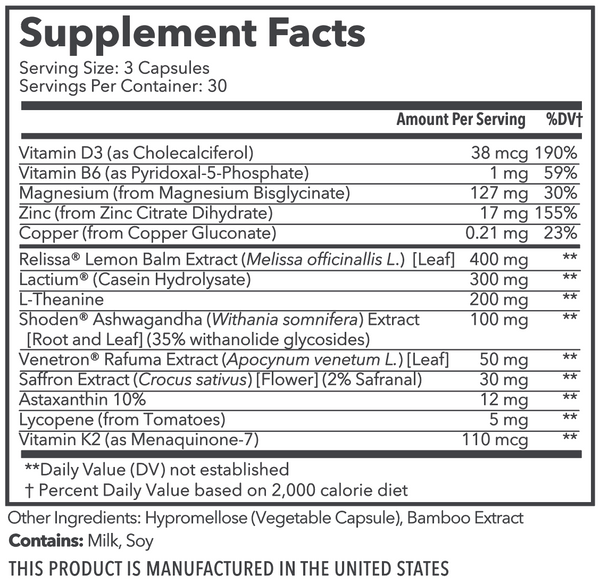
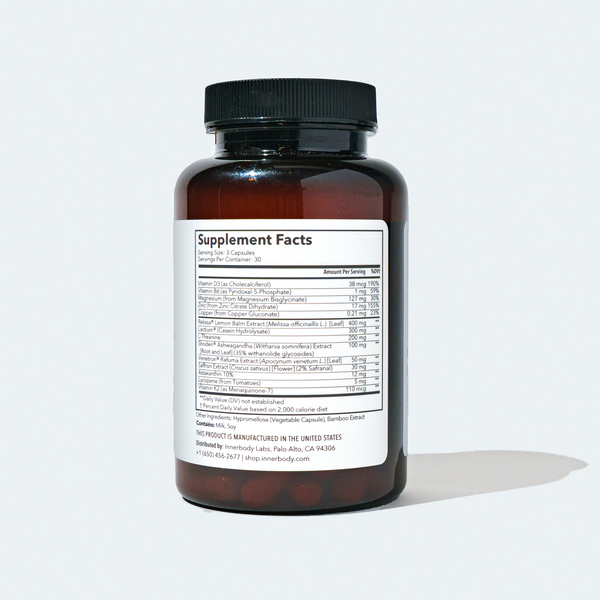
Ample research supports the positive correlation between carotenoid consumption and good sleep health. A good example is a 2023 study that concluded: “American adults with optimal sleep duration were associated with more dietary carotenoid intake.”[18] Astaxanthin appears to be especially effective toward this end, with a 12mg daily dose (the same amount in Innerbody Labs Sleep Support) leading to “significant improvement” in sleep parameters in an eight-week placebo-controlled trial.[19] Lycopene is another carotenoid found to be effective for sleep health (it, too, appears in Sleep Support).[23]
How common are dietary carotenoid deficiencies?
A dietary carotenoid deficiency typically manifests as vitamin A deficiency. It’s rare in the United States, but not unheard of, and it’s much more common in many developing countries.
Rare or not, a vitamin A deficiency stemming from insufficient carotenoid intake is a serious matter. UNICEF reports that it’s the world’s leading cause of preventable childhood blindness, and that it increases the risk of death from common childhood illnesses such as diarrhea.[20] It can, moreover, lead to night blindness, abnormal lung development, and respiratory diseases.[21]
Can you consume too many carotenoids?
On the other side of the carotenoid coin, there’s such a thing as excessive intake. It’s called carotenemia (or, a variant, lycopenemia), and, thankfully, it’s not nearly as serious as a deficiency. Typically resulting from the consumption of too many carotenes (more than 30mg per day for a prolonged period),[22] it presents as a yellow-orange skin discoloration, and that’s about it. Treatment entails switching to a low-carotene diet, absent carotene-rich foods like carrots and tomatoes.
The idea, then, is not to go overboard with your carotene consumption. A serving of carrots, pumpkin, or sweet potato every 1–2 days is plenty to keep pace with your body’s needs without ending up like you’re on the Oompa-Loompa skin care plan. If you’re going the supplemental route, look for products that provide doses that reasonably complement your diet with therapeutic but not-too-high doses, like the 5mg of lycopene in Innerbody Labs Sleep Support.
As for xanthophylls, they aren’t associated with any risk of carotenemia and are generally well-tolerated. Just stick to standard amounts, such as Sleep Support’s 12mg dose, and you ought to have nothing to worry about.


42 Reviews
Sleep Support
$65.00