
Melatonin: Short-Term Cheap, Long-Term Costly?
What scientists understand (and don't understand) about this powerful hormone

I took my first melatonin supplement in 2019 during a bout of lingering jet lag. My mother-in-law gave me a handful of purple gummies one evening, which I ate immediately, and that night I managed to fall asleep at my usual bedtime and stay asleep for a full eight hours, plus some.
On and off in the following years, I would use melatonin supplements whenever I experienced sleep trouble. Some nights they worked. Other nights, not so much. Whether or not they did, I often felt exhausted the next day.
My experience isn’t unique. Melatonin can be effective as an occasional solution for sleep troubles, but nightly supplementation can yield irregular results and diminishing returns. Because of its limitations, melatonin is a poor solution for long-term sleep health, and it may even contribute to health problems down the line.
Let’s examine exactly why that is, and how an alternative supplement could be better.
How melatonin works
Melatonin functions like an orchestra conductor telling parts of your body to ease up on their playing (“Eyes, you can relax. And Brain, turn down the temperature and blood pressure”).[1] These easements in activity transition you into a state receptive to sleep.
An endogenous hormone, or one occurring naturally in the body, melatonin originates in the pineal gland, which releases it in an inverse relationship to the amount of light in your environment: less melatonin in the daytime, and more at night. This daily release pattern helps regulate your circadian rhythm (i.e., the sleep–wake cycle).[2]
Melatonin supplements are synthetic forms of the hormone that operate within the body’s natural circadian framework. When you take a melatonin gummy, drop, capsule, or tablet, its active ingredient starts to circulate in your bloodstream the way that your endogenous melatonin would. In instances of circadian disruption, as in jet lag, supplementation acts like a system override so that you experience an increase in circulating melatonin at a time that your brain is still adjusting to a new light–dark schedule.[3]
Under normal circadian circumstances, a melatonin supplement simply adds to your body’s existing hormonal supply, increasing your chances of slipping into a deep sleep.
Melatonin the next day: Its short-term side effects
Outside of jet lag conditions, when I took melatonin to support my normal sleep pattern, I often experienced next-day symptoms such as grogginess and lethargy, making me feel as though I’d hardly slept at all despite an eight-hour slumber. These effects aren’t uncommon. Colloquially known as “melatonin hangover,” they’re likely the consequence of taking too much melatonin, too late the previous night, such that the body can’t eliminate it entirely overnight.[4] Sounds easy enough to prevent, but even a label-recommended dose taken at the label-recommended time can leave a person feeling hungover upon waking.
And a hangover isn’t the extent of the adverse events associated with melatonin. Per the U.K.’s National Health Service, as well as a 2021 review and meta-analysis, a regular user might also experience:[5] [6]
- Headache
- Dizziness
- Stomachache
- Nausea
- Dizziness
- Dry mouth
- Dry or itchy skin
- Pain in the extremities
- Strange dreams and night sweats
Although these side effects may be considered nonserious, they can cause significant problems in day-to-day living. A melatonin hangover, for example, could incapacitate you to the extent that you can’t focus at work and have to spend your lunch break taking a nap (I can attest to that).
Then there are the quality control problems. A 2017 meta-analysis in the Journal of Clinical Sleep Medicine found that some over-the-counter melatonin supplements contained up to 478% of the melatonin declared on the label, and even within production lots of the same brand, concentrations varied by as much as 465%.[7] That, to say the least, is way too much melatonin, especially considering that a starting dose is 1mg and adults are advised not to take more than 10mg at a time.[8] Such a high dose might not be lethal to an adult, but it’s enough that those hangover symptoms will hit you hard in the morning.[9]
Melatonin in the long run: Long-term costs to your health?
A 2025 study published in Circulation raises concerns about the health risks of long-term melatonin use. In it, researchers compared the health outcomes of melatonin users with insomnia with those of non-users after five years, and they found that the melatonin cohort had an 89% higher risk of heart failure, a threefold increase in heart failure-related hospitalizations, and a “doubling of all-cause mortality.” Given these findings, they concluded that melatonin does not appear to be the “benign chronic therapy” that many people believe it is.[10]
Even the less alarming medical studies recommend caution when using melatonin. In a 2023 review in eClinicalMedicine, the authors warn against “complacent use of melatonin” owing to a “major gap of knowledge on safety.”[11]
When should you use (and not use) melatonin?
Melatonin supplements are best used as short-term solutions to reset or reshape sleep patterns. The best user populations are people experiencing:[12]
- Jet lag
- Delayed sleep phase disorder (when sleep patterns are delayed by two or more hours compared to the usual)
What these populations have in common is the need to reset their circadian rhythms. With a quick course correction, they can resume normal sleeping patterns and discontinue supplementation. Plus, because their circulating melatonin levels are out of whack to start, they’re at lower risk of experiencing even the short-term health effects. For them, melatonin makes sense as a first-line intervention.
Where melatonin probably doesn’t make sense is for anyone with a chronic sleep problem, like insomnia or sleep apnea, which would involve ongoing supplementation and a greater risk for adverse effects. Likewise, melatonin is a poor choice for people seeking a preventive solution for maintaining normal sleep health.
The exception to exclusion might be shift workers. Their need to adapt continually to new sleep needs may outweigh melatonin’s risks. This use case is supported by at least one double-blind, placebo-controlled trial in which melatonin reduced sleep-onset latency in shift-worker nurses, helping them adapt to fluctuating schedules.[13]
What’s the alternative to melatonin?
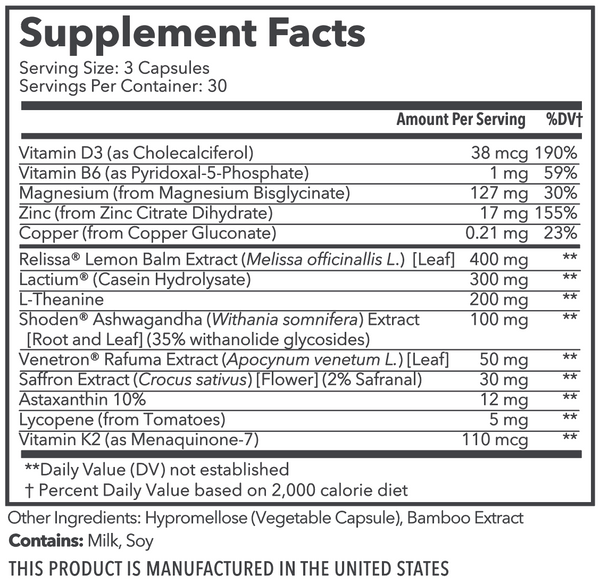
For most people, the best alternative to melatonin would be a proactive approach that gently conditions the body into a healthier sleep pattern, with ingredients that relax, not sedate. Ingredients like:
- Ashwagandha
- Apocynum venetum
- Astaxanthin
- L-Theanine
- Lactium
- Lemon balm
- Lycopene
- Magnesium
- Saffron
In some cases, such ingredients seem to improve your body’s use of its endogenous melatonin, so instead of introducing more of the hormone to your body, you’re more efficiently using the amount you already have. Saffron, for example, has been shown to increase evening melatonin.[14] The same goes for magnesium.[15]
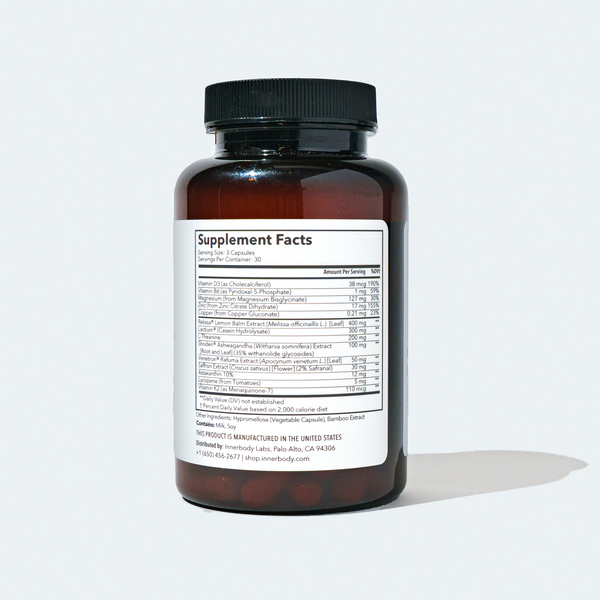
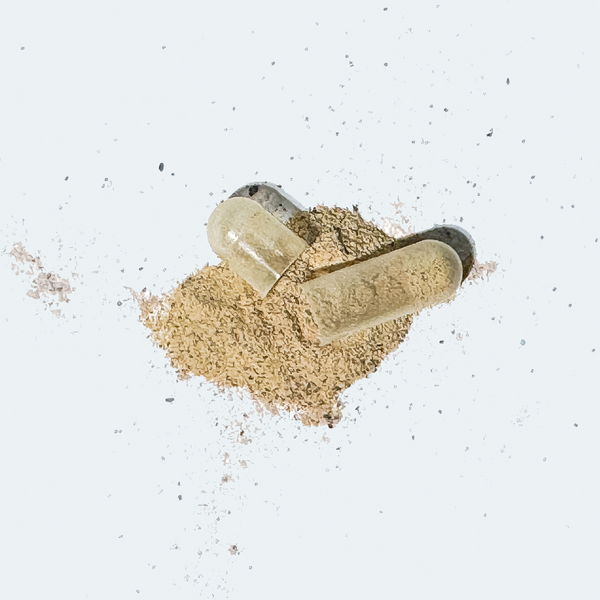
These ingredients, by the way, are some of the key actives in Innerbody Labs Sleep Support, which was conscientiously formulated as a more sustainable supplemental solution for sleep health. Present in doses used successfully in clinical studies, they each work together to ease you into a sleep-ready state, without the drowsiness and next-day downsides of melatonin.


42 Reviews
Sleep Support
$65.00