
Are You Getting Enough Selenium?
What selenium does in the body, where it’s found in food, and why deficiency matters.

Selenium isn’t a nutrient most people think about. Few adults track how much they’re getting, and there’s rarely an obvious sign when levels are low or inconsistent.
What makes selenium unusual is how much it depends on where your food comes from. The mineral content of soil varies widely, so two people eating similarly “healthy” diets can still end up with very different selenium levels.[1] Most of the time, it flies under the radar — until a specific concern comes up, like fertility, thyroid health, or immune resilience.
So how do you know whether your diet is quietly missing this key player? In this article, we’ll walk through what selenium does in the body, where it shows up in food, and why it tends to stay in the background — until it suddenly matters.
What selenium does in the body
Selenium is an essential trace mineral that your body uses to keep several core systems functioning properly. Rather than acting on its own, selenium is built into a small group of proteins — called selenoproteins — that play direct roles in antioxidant protection, hormone regulation, immune signaling, and reproductive health.[2]
Selenium helps protect cells from oxidative stress
One of selenium’s most important jobs is helping your cells manage oxidative stress — the normal wear and tear that builds up as your body produces energy.[3] That stress increases with factors like pollution, smoking, illness, intense exercise, and even chronic psychological strain.
Several selenium-containing enzymes are part of your body’s built-in antioxidant defense system. When selenium levels are sufficient, it helps:
- Neutralize reactive oxygen species before they damage cells
- Protect cell membranes and DNA from oxidative injury
- Support normal repair and turnover of damaged cells
This protection is especially important in tissues with high metabolic activity, such as immune cells and reproductive tissues.
Selenium supports normal thyroid hormone activity
Your thyroid gland produces hormones — but those hormones must be converted into their active form before they can regulate metabolism, energy use, and temperature control. That conversion relies on selenium-dependent enzymes.[4]
When selenium levels are sufficient, it supports:
- Activation of thyroid hormones within tissues
- Consistent thyroid signaling throughout the body
- Normal thyroid function alongside adequate iodine
This is why selenium is consistently discussed in thyroid nutrition — it supports the biochemical steps that allow thyroid hormones to do their job.
Selenium supports immune function
During infection or inflammation, immune cells generate oxidative stress as part of their normal response. Selenium-containing enzymes help those cells manage that stress while coordinating appropriate immune signaling.[5]
Sufficient selenium helps the immune system:
- Maintain healthy immune cell structure
- Coordinate immune responses during stress or infection
- Regulate inflammatory activity
Together, these roles support normal immune defenses, particularly during periods of increased physiological demand.
Selenium supports male reproductive and hormonal health
Healthy sperm development depends in part on selenium-containing enzymes that help protect reproductive cells from oxidative stress — an important factor in sperm quality.[6]
Healthy selenium levels are associated with:
- Healthier sperm morphology (shape and structure)
- Improved sperm motility (movement)
- Protection of sperm cells from oxidative stress
Selenium also supports processes involved in testosterone production, including the normal function of the cells in the testes responsible for hormone synthesis.[7]
Because these cells are sensitive to oxidative stress, selenium’s antioxidant role helps support their normal function over the long term.
Where does selenium come from?
All of the selenium in your body comes from food or supplements. But how much you get can vary more than most people realize. Selenium enters the food supply through soil and animal feed, which means your intake depends not only on what you eat, but also on where those foods were grown or raised.[8] [9]
Selenium levels in soil vary widely by region. Some areas naturally contain more selenium, while others are relatively low, which directly affects how much crops can absorb.[9] As a result, two similar foods can contain very different amounts of selenium depending on where they were produced.
For example, wheat grown in the United States — where soils tend to be relatively selenium-rich — has been reported to contain up to 10 times more selenium than wheat grown in the United Kingdom, where soils are naturally lower in selenium. This had real consequences: when the UK shifted from importing North American wheat to relying more heavily on domestically grown wheat, average selenium intake in the population declined.[18]
In practical terms, selenium shows up in many everyday foods, with the most consistent sources coming from animal-based foods and seafood:[2] [9]
- Seafood (such as tuna, sardines, shrimp, and shellfish)
- Meat and poultry (including beef, chicken, and turkey)
- Eggs and dairy products
- Legumes, nuts, and seeds
Animal-based foods tend to provide more consistent selenium levels because livestock diets often combine feed from multiple sources, which helps average out regional variations.
Together, these factors help explain why selenium status can differ meaningfully from person to person — even among people eating similar diets.
Am I getting enough selenium?
For most people in the United States, the answer is yes. Average selenium consumption is above the recommended amount, which is why true deficiency is relatively uncommon.[8] [9]
The RDA for adults is 55mcg per day, and typical U.S. diets generally meet or exceed that level.[8] [9] For perspective, a single serving of selenium-rich foods can provide a meaningful portion of that amount — about 90mcg from three ounces of tuna, 30mcg from two large eggs, or roughly 20mcg from a cup of cooked lentils.
Even so, maintaining adequate levels remains important. While overt deficiency is rare, smaller gaps can subtly affect the enzymes responsible for antioxidant protection, thyroid hormone activation, and reproductive function.[2] These changes aren’t always obvious, but they can matter during periods of increased stress or demand — making consistent intake particularly relevant for certain groups.
Who might be getting less?
Selenium status isn't uniform across the population. Some people are more likely to have lower levels, even if they don't meet the criteria for overt deficiency.[10] [11] [12] [13]
This includes people who:
- Eat little seafood or animal products
- Follow highly restrictive or repetitive diets
- Have malabsorption conditions, such as celiac disease or Crohn’s disease
- Have chronic kidney disease or are on dialysis
In these situations, selenium intake — or the body’s ability to absorb and retain it — can be less predictable, making consistent adequacy more important.
Can you get too much selenium?
Yes — but it’s uncommon. Excess typically occurs with very high supplemental doses or unusual dietary patterns, not from a balanced diet.
For adults, the tolerable upper intake level (UL) is 400mcg per day.[8] Consistently exceeding that amount can lead to a condition called selenosis, which may cause symptoms such as gastrointestinal upset, changes in hair or nails, and — in more severe cases — neurological effects.[8] [9]
Most people don’t approach this level through food alone. One notable exception is Brazil nuts, which can contain anywhere from about 50 to over 90mcg per nut, depending on where they’re grown.[14] Having them occasionally isn’t a concern, but eating several daily — especially over time — can raise selenium levels more than expected.[15]
Should I take a selenium supplement?
For most people eating a varied diet, selenium supplementation isn't strictly necessary. Average intake in the United States already meets or exceeds the RDA of 55mcg per day, and true deficiency is uncommon.[8] [9] For many adults, regularly including selenium-rich foods — such as seafood, eggs, legumes, nuts, and meat — is enough to maintain healthy levels.
That said, there are situations where a modest supplement may be reasonable.
Selenium is frequently included in multivitamins and men’s health formulas not to deliver high doses, but to help ensure consistent adequacy when dietary patterns fluctuate. This is particularly relevant in areas like reproductive health.
Researchers have observed a direct relationship between serum testosterone levels and selenium status in infertile men, suggesting that selenium plays a meaningful role in male fertility.[16] Other research indicates that insufficient selenium may affect sperm motility, semen quality, and even pregnancy outcomes.[17] These findings don’t suggest that high doses are better — but they do underscore the importance of avoiding deficiency, especially when fertility is a concern.
With this context in mind, supplementation may make sense if:
- Your diet is low in seafood or animal products, or highly restrictive
- You have a condition that affects nutrient absorption, such as celiac disease or Crohn’s disease
- You’re prioritizing reproductive or hormonal health, where selenium-dependent enzymes support antioxidant protection and normal hormone synthesis
When supplementation is used, conservative dosing is important. A modest daily amount — such as 15–30mcg — can help reinforce baseline adequacy without approaching the adult upper limit of 400mcg per day.[8] This range is comparable to the selenium found in a typical serving of foods like eggs or poultry and is intended to support nutritional stability rather than dramatically increase total exposure.
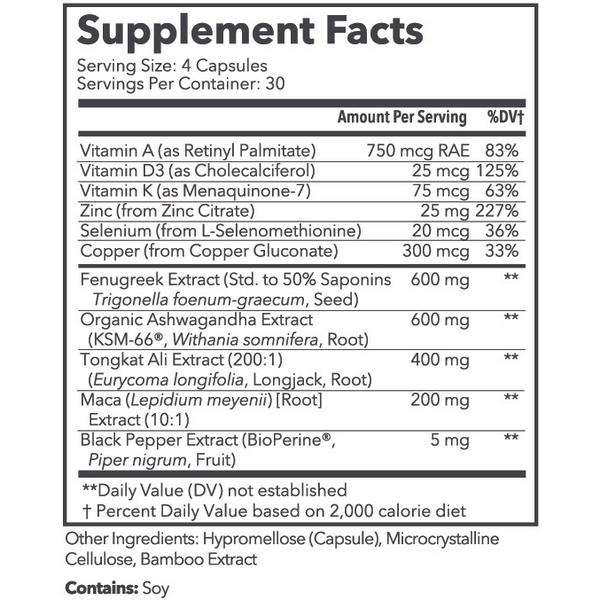
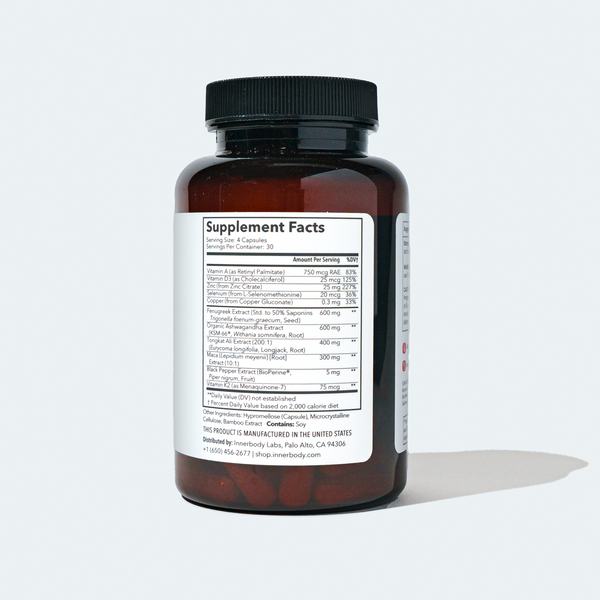
For example, Innerbody Labs Testosterone Support includes 20mcg of selenium as part of a broader men’s health formulation. Rather than relying on high-dose selenium, the formula supports adequacy alongside 10 other evidence-informed ingredients selected to support hormonal health.
If you’re unsure about your selenium status — particularly in the context of fertility, thyroid health, or hormone concerns — discussing diet and possible lab testing with a healthcare provider can provide clarity.
In the end, selenium isn't a nutrient most people need to actively micromanage. But because it supports systems that depend on tight biochemical control, maintaining adequate levels remains important.

73 Reviews
Testosterone Support
$78.00