
The Benefits of Vitamin K2
How vitamin K2 supports calcium handling and long-term tissue health.

Some nutrients are easy to get. They show up consistently in common foods, are tracked carefully, and come with clear intake targets.
Vitamin K2 doesn’t really fit that mold.
Part of the reason is that vitamin K2 is just one form within the broader vitamin K family, and most nutrition guidelines don’t distinguish between those forms.[1] There’s no recommended dietary allowance specifically for vitamin K2, and intake data typically groups all vitamin K together.[2] That lack of distinction matters because vitamin K2 appears to support biological processes that extend beyond the roles traditionally associated with vitamin K as a whole.
Complicating things further, the foods richest in vitamin K2 — fermented foods, certain cheeses, egg yolks, and specific animal products — tend to be eaten irregularly or avoided altogether in some modern diets.[3]
That’s why understanding vitamin K2 starts with a more basic question: what are the different forms of vitamin K, and where do they come from?
What is vitamin K?
Vitamin K isn’t a single compound but a family of fat-soluble vitamins that share a similar chemical backbone while behaving differently in the body. The two natural forms most relevant to human nutrition are:
- Vitamin K1
- Vitamin K2
Historically, these forms were grouped together because they share a common role in activating vitamin K–dependent proteins. Over time, however, researchers began to recognize that different forms of vitamin K vary widely in where they travel in the body, how long they remain active, and which tissues they primarily support.[1] [4]
Yet nutrition guidelines still reflect the earlier grouping. Recommended intakes and population data typically refer to “vitamin K” as a whole, without distinguishing between K1 and K2.[2] As a result, it’s possible to meet general vitamin K recommendations while getting relatively little exposure to vitamin K2 specifically.
What’s the difference between vitamin K1 and vitamin K2?
To understand why vitamin K2 is discussed separately today, it helps to compare it with vitamin K1.
Vitamin K1, also known as phylloquinone, is found primarily in plant foods, especially leafy green vegetables like spinach, kale, and broccoli. After consumption, it’s transported mainly to the liver, where it helps activate proteins involved in normal blood clotting.[1] [5] This liver-centered role helps explain why early vitamin K research, which focused largely on blood clotting, centered on vitamin K1.
Vitamin K2, collectively referred to as menaquinones, behaves differently. Rather than existing as a single compound, vitamin K2 includes several related forms produced mainly by bacteria and found in fermented foods and certain animal products. These forms tend to remain active in circulation for longer and are more likely to reach tissues outside the liver, including bone and vascular tissue.[3] [4]
In practical terms, both vitamin K1 and vitamin K2 contribute to overall vitamin K status, but they tend to support different physiological systems over different time frames:
- Vitamin K1 (phylloquinone) is rapidly absorbed and acts primarily in the liver.
- Vitamin K2 (menaquinones) circulates for longer and is more closely associated with longer-term regulation of calcium-dependent processes throughout the body.[4] [6]
These differences help explain why vitamin K1 and vitamin K2 are often discussed separately today, and why some researchers have questioned whether grouping them under a single “vitamin K” category fully reflects how each form functions in the body.[34]
What are the types of vitamin K2?
The various forms of vitamin K2 are designated MK followed by a number, from MK-4 to MK-13. The number reflects a structural difference between the forms — specifically, the length of a molecular “side chain” attached to the vitamin K backbone. While all menaquinones share the same core structure, longer side chains are generally associated with longer circulation time in the body, which can influence where and how each form is used.[4] [7]
The most meaningful differences between the forms relate to persistence rather than potency. Because vitamin K2 works by activating specific proteins over time rather than delivering a one-time effect, the form used can meaningfully influence how consistently those processes are supported.[4] [8]
Of these forms, MK-4 and MK-7 are the most widely studied:
- MK-4 is found in small amounts in certain animal products, such as egg yolks and liver. It can also be formed in animal tissues through the conversion of vitamin K1.[9] Research suggests that MK-4 is taken up by tissues relatively quickly, which may help explain why it doesn’t remain in circulation for long periods.[7]
- MK-7 is produced by bacteria and is most commonly found in foods like natto, a traditional Japanese dish made from fermented soybeans. Compared with MK-4, MK-7 tends to remain active in the bloodstream for longer, allowing it to circulate more consistently throughout the body.[7] [8]
Other menaquinones (such as MK-8, MK-9, and higher forms up to MK-13) are present in lower amounts in fermented foods and certain animal products. These forms are less well studied, and their specific roles in human health are not yet clearly defined.[4] [5]
What are the benefits of vitamin K2?
Vitamin K2 draws attention for one main reason: it helps activate vitamin K–dependent proteins that regulate how calcium is handled in the body. Some of these proteins are most relevant to bone, while others influence blood vessels and soft tissues. This process of protein activation connects most of what we know about vitamin K2’s potential benefits.
Below are the areas in which vitamin K2 has been studied most closely.
Calcium management
Calcium is constantly moving through the body, but where it ends up depends not only on how much is available, but also on how well certain regulatory systems are functioning. Vitamin K2 plays a role in those systems by supporting the activation of proteins that guide calcium into appropriate tissues and help keep it from accumulating where it doesn’t belong.[31]
Many of these calcium-handling proteins are produced regardless of vitamin K intake. Without adequate vitamin K, however, they remain only partially functional. A biochemical step called carboxylation is required to switch them into their active forms — a process that allows them to bind calcium and carry out their roles effectively. Both vitamin K1 and vitamin K2 can support this activation, but vitamin K2 is more often discussed in bone and vascular health because it remains active in circulation longer and is more likely to reach these tissues.
Two of the most closely studied vitamin K–dependent proteins help illustrate this process in practice:[35]
- Osteocalcin, produced by bone-forming cells, plays a role in binding calcium into the bone matrix — the mineral-rich framework that gives bones their strength — once activated.[10]
- Matrix Gla protein (MGP), found in vascular tissue, helps limit inappropriate calcium buildup in blood vessel walls when active.[11]
Seen this way, vitamin K2 isn’t moving calcium directly or acting as a transport signal. Instead, it helps ensure that the proteins responsible for handling calcium are switched on and able to do their jobs over time — which is why its role is often described in terms of “calcium placement” rather than calcium supply.
Bone strength and fracture risk
Bone health is one of the most established areas of interest for vitamin K2. By activating osteocalcin, vitamin K2 supports the process by which calcium is incorporated into the bone matrix.[10]
Evidence in this area includes:
- Meta-analyses and systematic reviews evaluating bone mineral density and fracture outcomes across multiple trials, many involving menaquinone forms of vitamin K[12] [13]
- Longer-duration trials of MK-7, particularly in postmenopausal women, showing improvements in vitamin K status and markers consistent with reduced age-related bone loss[14]
Not every study reports large changes in bone density, and results vary based on population and study design. But taken together, these findings support vitamin K2’s role as a supportive nutrient for bone health, even when changes in bone density are modest.
Vascular health and arterial stiffness
Vitamin K2’s cardiovascular relevance centers on vascular calcification, a process linked to arterial stiffness and long-term cardiovascular risk.
MGP plays a central role here. When inactive, it cannot effectively limit calcium buildup in blood vessel walls.[11] Researchers often measure inactive MGP forms, such as dp-ucMGP, as indicators of poor vitamin K status in vascular tissue.
Human studies include:
- A randomized, double-blind trial in postmenopausal women showing that MK-7 supplementation improved measures of arterial stiffness and reduced inactive MGP compared with placebo[15]
- A meta-analysis of randomized trials reporting that vitamin K supplementation significantly lowers dp-ucMGP and may slow the progression of coronary artery calcification, though results vary across studies[16]
While biomarker changes and functional measures are encouraging, not all clinical cardiovascular outcomes have been conclusively established.
Cardiovascular outcomes
Large population studies have also shaped interest in vitamin K2. Several cohorts report associations between higher dietary intake of menaquinones and lower risk of coronary heart disease or reduced vascular calcification.[17]
Because these findings are observational, they cannot establish cause and effect. However, they help explain why vitamin K2 continues to be studied in the context of cardiovascular aging.
Vitamin K2’s role alongside vitamin D
One area where vitamin K2’s role becomes especially clear is in how it interacts with vitamin D.
Vitamin D plays an essential role in calcium balance. It increases calcium absorption from the gut and signals the body to produce proteins involved in bone formation and vascular regulation.[18] [19] Without enough vitamin D, those processes can’t get started.
But producing those proteins isn’t the same as activating them.
Vitamin K2 is required to switch several vitamin D–dependent, calcium-handling proteins into their active forms. When vitamin K status is low, those proteins may remain partially inactive, even when vitamin D levels are adequate.[18]
In other words, vitamin D helps make calcium available, while vitamin K2 helps ensure that calcium is handled appropriately in tissues like bone and blood vessels. This complementary relationship helps explain why researchers often describe vitamins D and K2 as working together rather than independently.[18] [20]
Am I getting enough vitamin K2?
There’s no simple way to answer that question. And that’s part of the issue.
Unlike many nutrients, vitamin K2 does not have its own recommended dietary allowance (RDA). Current guidelines refer to total vitamin K, without distinguishing between vitamin K1 and vitamin K2.[1] Instead of an RDA, vitamin K has an Adequate Intake (AI) level set at 120mcg/day for adult men and 90mcg/day for adult women.[21]
Those values are based largely on vitamin K’s role in blood clotting and are heavily influenced by vitamin K1 intake. They do not reflect vitamin K2 intake specifically — which matters, because vitamin K1 and vitamin K2 behave differently in the body and come from very different foods.
Unlike vitamin K1, which appears consistently in leafy green vegetables, vitamin K2 is concentrated in a relatively small group of foods.[1] [3] The richest dietary sources tend to fall into a few categories:[22]
- Fermented foods, such as natto and some traditionally fermented cheeses
- Certain cheeses, particularly aged varieties
- Egg yolks and select animal products, including liver
Many of these foods are eaten irregularly, and some are rarely consumed at all in some diets. As a result, vitamin K2 intake can vary widely from person to person. Two people may appear to meet general vitamin K recommendations on paper while consuming very different amounts of vitamin K2 in practice.[7] Some may get meaningful amounts without realizing it, while others may get very little simply because these foods don’t show up often in their usual meals.
Because vitamin K2 intake depends so heavily on food choice, overall vitamin K intake can look adequate while vitamin K2 intake remains low — a distinction that has shaped how researchers study it.
How to supplement with vitamin K2
If you regularly eat foods like natto, aged cheeses, egg yolks, or liver, you may already be getting meaningful amounts of vitamin K2. But for many people, those foods show up sporadically, if at all, which makes vitamin K2 intake hard to predict from diet alone.[23] That’s where supplements can make sense: they remove the “sometimes” factor.
When evaluating a vitamin K2 supplement, two considerations tend to matter most:
- Form: Look for vitamin K2 as MK-7 (menaquinone-7), the form that remains active in circulation longer and is most often used in human research.[7] [8]
- Amount: Many clinical studies evaluating vitamin K–dependent proteins and markers related to bone and vascular health use MK-7 in the range of 45–200mcg/day.[13] [24] [25]
Also, consider that vitamin K2 is especially relevant for people already taking vitamin D. While vitamin D supports calcium absorption, vitamin K2 helps ensure that calcium-related signaling translates into properly activated proteins in bone and vascular tissue.[18] [20] For that reason, vitamin D and vitamin K2 are often considered together in well-designed supplement strategies.
At Innerbody Labs, formulas that include vitamin D are designed with this relationship in mind.
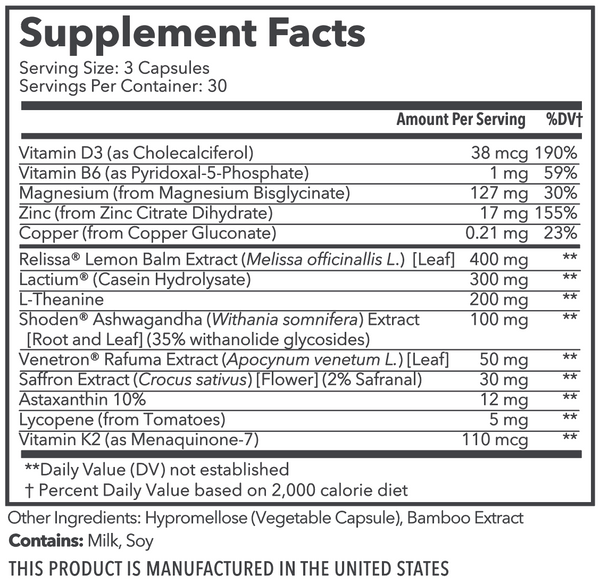
- Sleep Support includes 110mcg of vitamin K2 as MK-7 alongside vitamin D, magnesium, zinc, and calming compounds like L-theanine.[26] [27] Vitamin D has been associated in research with sleep regulation and overall sleep quality, while vitamin K2 supports calcium-dependent processes involved in normal muscle function and overnight recovery.[23] [33]
- Testosterone Support also uses vitamin K2 in the MK-7 form, providing 75mcg alongside vitamin D, zinc, selenium, and botanicals commonly studied in men’s health.[28] [29] [30] Research has consistently shown an association between vitamin D status and serum testosterone levels in men, suggesting that maintaining adequate vitamin D is relevant to hormonal health over time.[32]
In this context, vitamin K2 is included intentionally. When vitamin D intake is increased through supplementation, vitamin K2 helps support the downstream systems responsible for managing calcium appropriately.



48 Reviews
Sleep Support
$65.00