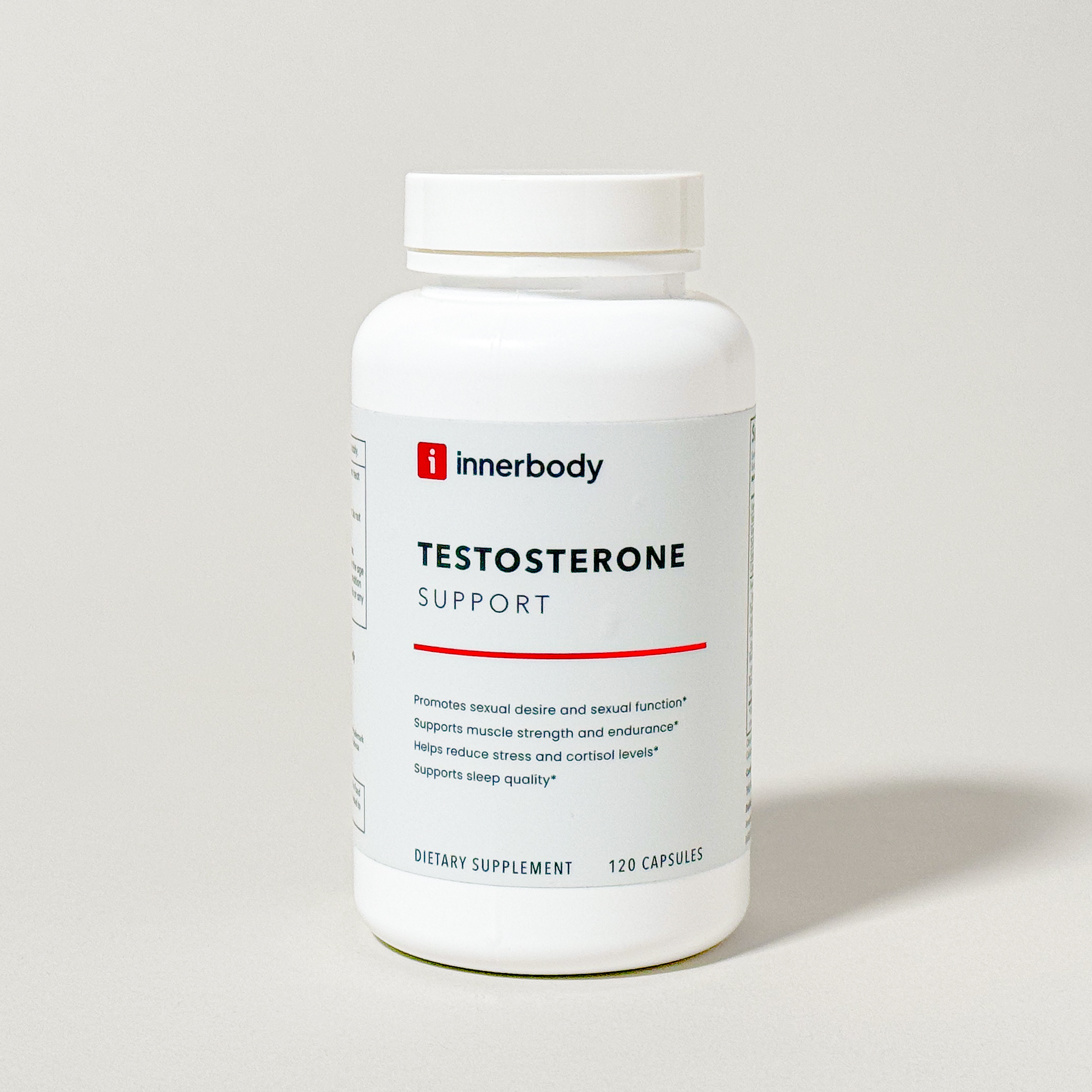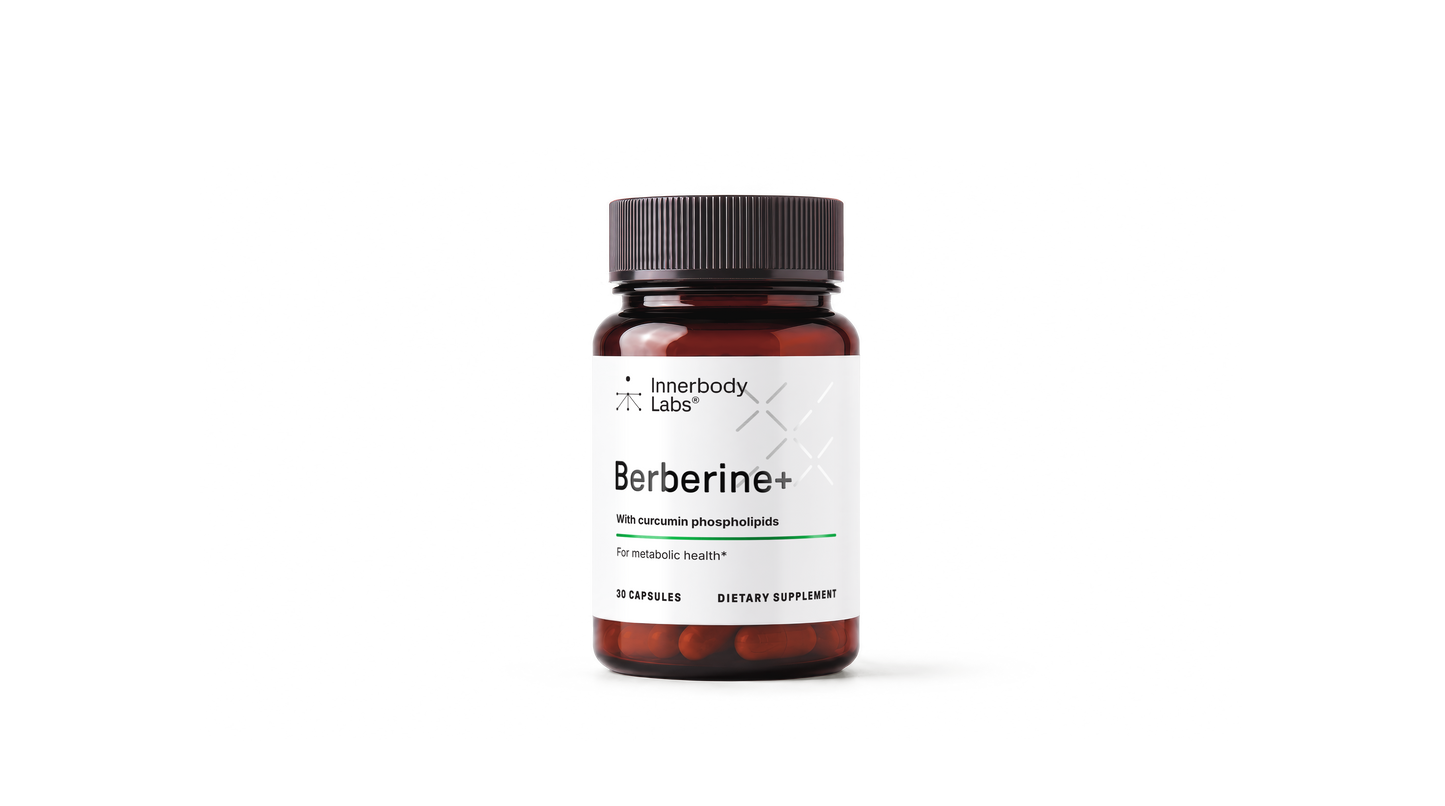
Testosterone Support
Evidence based testosterone support - built for efficacy, optimized for safety.
Uses human-studied ingredients at effective doses and excludes compounds linked to contamination or organ strain.
Couldn't load pickup availability
Key Ingredients
- Berbevis® Berberine Phytosome
- Meriva® Curcumin Phytosome
Vegetarian Friendly
Gluten-Free
cGMP-Certified
Non-GMO
Dairy-Free
Lab-Tested
Pairs best with

| Amount Per Serving | %DV | |
|---|---|---|
| Berbevis® Berberine Phytosome® (Berberis aristataextract [root] and phospholipid complex from pea protein isolate, sunflower lecithin, and grape seed extract) | 550 mg | ** |
| Meriva® Curcumin Phytosome® (Curcuma longa extract [rhizome] and phospholipid complex from sunflower lecithin) | 100 mg | ** |
What customers are saying
I was looking for a lower-dose berb that worked. This is perfect for me.
Chanelle
Verified BuyerThis does the trick for me and my wife, we both have heart concerns in our family.
TJ
Verified BuyerRenewing it - worth the money. Pls don't discontinue.
Robert J
Verified BuyerInner Body Lab goes above and beyond and this is no exception. Gentle enough to avoid discomfort but strong enough to make real difference. A++
Holly B
Verified BuyerSee what we included and why
| Amount Per Serving | %DV | |
|---|---|---|
| Berbevis® Berberine Phytosome® (Berberis aristataextract [root] and phospholipid complex from pea protein isolate, sunflower lecithin, and grape seed extract) | 550 mg | ** |
| Meriva® Curcumin Phytosome® (Curcuma longa extract [rhizome] and phospholipid complex from sunflower lecithin) | 100 mg | ** |
| Amount Per Serving | %DV | |
|---|---|---|
| Berbevis® Berberine Phytosome® (Berberis aristataextract [root] and phospholipid complex from pea protein isolate, sunflower lecithin, and grape seed extract) | 550 mg | ** |
| Meriva® Curcumin Phytosome® (Curcuma longa extract [rhizome] and phospholipid complex from sunflower lecithin) | 100 mg | ** |
See what we included and why
Supports healthy blood pressure, lipid profiles, and blood glucose — without the GI risk*
For the better part of a century, berberine has performed exceptionally well in human studies looking at metabolic health — including research into blood pressure, glucose management, lipid profiles, and more.*
Berbevis® berberine phytosomes deliver more berberine where it’s needed most, allowing you to take a smaller dose and reduce the risk of adverse GI effects associated with traditional berberine HCI. Berbevis® phytosomal berberine boasts a tenfold increase in bioavailability compared to standard berberine HCl, which allows you to experience the clinically proven benefits with minimal side effects.
For further support of metabolic health, antioxidant activity, and GI comfort*
Curcumin research dates back about as long as berberine’s, and it shows many of the same benefits, with improvements in metabolic health markers.* We use phytosomal curcumin (Meriva®) for its improved bioavailability, at a 100 mg dose which has been studied to relieve GI discomfort.
Supported by clinical research
Improve markers of metabolic health without negative GI effects
Berberine PhytosomeSupport antioxidant activity while promoting GI comfort
Curcumin Phytosome- Cesarone, M. R., Hu, S., Belcaro, G., Cornelli, U., Feragalli, B., Corsi, M., Scipione, V., Scipione, C., Cotellese, R., Hosoi, M., Cox, D., & Coppa Zuccari, F. (2025). Borderline hyperlipidemia: preventive supplementation with berberine phospholipids to prevent early atherosclerosis evolution. Minerva Medica, 116(4), 285–291.
- Cesarone, M. R., Hu, S., Belcaro, G., Cornelli, U., Feragalli, B., Corsi, M., Scipione, V., Scipione, C., Cotellese, R., Hosoi, M., & Cox, D. (2024). Borderline hyperlipidemia preventive management with Berberine PL in asymptomatic prevention of early atherosclerosis. Minerva Gastroenterology, 70(1), 10–15.
- Tian, X., Chen, Q., He, Y., Cheng, Y., Zhao, M., Li, Y., Yu, M., Jiang, J., & Wang, L. (2026). Berberine: A Negentropic Modulator for Multi-System Coordination. International Journal of Molecular Sciences, 27(2), 747.
- Nourizadeh, N., Vazifeh Mostaan, L., Saburi, E., Farzaei, M. H., & Sahebkar, A. (2022). Modulatory effect of berberine on plasma lipoprotein (or lipid) profile: A review.Molecular Biology Reports, 49(11), 10885–10893.
- Liu, D., Zhao, H., Zhang, Y., Hu, J., & Xu, H. (2025). Efficacy and safety of berberine on the components of metabolic syndrome: A systematic review and meta-analysis of randomized placebo-controlled trials. Frontiers in Pharmacology, 16, 1572197.
- Shi, L., Wang, W., Jing, C., et al. (2025). Berberine and health outcomes: An overview of systematic reviews. BMC Complementary Medicine and Therapies, 25, Article 147.
- Yang, L., Zhu, W., Zhang, X., Zhou, X., Wu, W., & Shen, T. (2023). Efficacy and safety of berberine for several cardiovascular diseases: A systematic review and meta-analysis of randomized controlled trials. Phytomedicine : International Journal of Phytotherapy and Phytopharmacology, 112, 154716.
- Visalli, F., Capobianco, M., Cappellani, F., Rapisarda, L., Spinello, A., Avitabile, A., Cannizzaro, L., Gagliano, C., & Zeppieri, M. (2026). Mitochondrial Health Through Nicotinamide Riboside and Berberine: Shared Pathways and Therapeutic Potential. International Journal of Molecular Sciences, 27(1), 485.
- Dong, H., Zhao, Y., Zhao, L., & Lu, F. (2013). The effects of berberine on blood lipids: a systemic review and meta-analysis of randomized controlled trials. Planta Medica, 79(6), 437–446.
- Fang, X., Wu, H., Wei, J., Miao, R., Zhang, Y., & Tian, J. (2022). Research progress on the pharmacological effects of berberine targeting mitochondria. Frontiers in Endocrinology, 13, 982145.
- Guo, J., Chen, H., Zhang, X., Lou, W., Zhang, P., Qiu, Y., Zhang, C., Wang, Y., & Liu, W. J. (2021). The Effect of Berberine on Metabolic Profiles in Type 2 Diabetic Patients: A Systematic Review and Meta-Analysis of Randomized Controlled Trials. Oxidative Medicine and Cellular Longevity, 2021, 2074610.
- Mbara, K. C., Kheoane, P. S., & Tarirai, C. (2025). Targeting AMPK signaling: The therapeutic potential of berberine in diabetes and its complications. Pharmacological Research - Modern Chinese Medicine, 17, 100689.
- Zhu, X., Wei, Y., Yang, B., Yin, X., & Guo, X. (2020). The mitohormetic response as part of the cytoprotection mechanism of berberine: Berberine induces mitohormesis and mechanisms. Molecular Medicine, 26, 10.
- Cheng, Z., Kang, C., Che, S., Su, J., Sun, Q., Ge, T., Guo, Y., Lv, J., Sun, Z., Yang, W., Li, B., Li, X., & Cui, R. (2022). Berberine: A Promising Treatment for Neurodegenerative Diseases. Frontiers in Pharmacology, 13, 845591.
- Xie, W., Su, F., Wang, G., Peng, Z., Xu, Y., Zhang, Y., Xu, N., Hou, K., Hu, Z., Chen, Y., & Chen, R. (2022). Glucose-lowering effect of berberine on type 2 diabetes: A systematic review and meta-analysis. Frontiers in Pharmacology, 13, 1015045.
- Suadoni, M. T., & Atherton, I. (2021). Berberine for the treatment of hypertension: A systematic review. Complementary Therapies in Clinical Practice, 42, 101287
- Cesarone, M. R., Hu, S., Belcaro, G., Cornelli, U., Feragalli, B., Corsi, M., Scipione, V., Scipione, C., Cotellese, R., Hosoi, M., Cox, D., & Coppazuccari, F. (2024). Non-interactions of berberine supplementation in borderline hyperlipidemia prevention (asymptomatic early atherosclerosis subjects) and under chronic therapies: A pilot registry study (BERINT). Austin Journal of Cardiovascular Disease and Atherosclerosis, 11(2), Article 1065.
- Petrangolini, G., Corti, F., Ronchi, M., Arnoldi, L., Allegrini, P., & Riva, A. (2021). Development of an Innovative Berberine Food-Grade Formulation with an Ameliorated Absorption: In Vitro Evidence Confirmed by Healthy Human Volunteers Pharmacokinetic Study. Evidence-Based Complementary and Alternative Medicine : ECAM, 2021, 7563889.
- Di Pierro, F., Sultana, R., Eusaph, A. Z., Abrar, S., Bugti, M., Afridi, F., Farooq, U., Iqtadar, S., Ghauri, F., Makhduma, S., Nourin, S., Kanwal, A., Bano, A., Bugti, A. A., Mureed, S., Ghazal, A., Irshad, R., Recchia, M., Bertuccioli, A., . . . Khan, A. (2023). Effect of Berberine Phytosome on reproductive, dermatologic, and metabolic characteristics in women with polycystic ovary syndrome: A controlled, randomized, multi-centric, open-label clinical trial. Frontiers in Pharmacology, 14, 1269605.
- Rondanelli, M., Riva, A., Petrangolini, G., Allegrini, P., Giacosa, A., Fazia, T., Bernardinelli, L., Gasparri, C., Peroni, G., & Perna, S. (2021). Berberine Phospholipid Is an Effective Insulin Sensitizer and Improves Metabolic and Hormonal Disorders in Women with Polycystic Ovary Syndrome: A One-Group Pretest–Post-Test Explanatory Study. Nutrients, 13(10), 3665.
- Wade, U., Pascual-Figal, D. A., Rabbani, F., Ernst, M., Albert, A., Janssens, I., Dierckxsens, Y., Iqtadar, S., Khokhar, N. A., Kanwal, A., & Khan, A. (2024). The Possible Synergistic Pharmacological Effect of an Oral Berberine (BBR) and Curcumin (CUR) Complementary Therapy Alleviates Symptoms of Irritable Bowel Syndrome (IBS): Results from a Real-Life, Routine Clinical Practice Settings-Based Study. Nutrients, 16(8), 1204.
- Zeng, Y., Luo, Y., Wang, L., Zhang, K., Peng, J., & Fan, G. (2023). Therapeutic Effect of Curcumin on Metabolic Diseases: Evidence from Clinical Studies. International Journal of Molecular Sciences, 24(4), 3323.
- Dias, K. A., Oliveira, L. A., Santana Pereira, S. M., Paes, S., Monte, L. F., Sarandy, M. M., Novaes, R. D., Gonçalves, R. V., & Della Lucia, C. M. (2021). Effects of Curcumin Supplementation on Inflammatory Markers, Muscle Damage, and Sports Performance during Acute Physical Exercise in Sedentary Individuals. Oxidative Medicine and Cellular Longevity, 2021, 9264639.
- Kunnumakkara, A. B., Hegde, M., Parama, D., Girisa, S., Kumar, A., Daimary, U. D., Garodia, P., Yenisetti, S. C., Oommen, O. V., & Aggarwal, B. B. (2023). Role of Turmeric and Curcumin in Prevention and Treatment of Chronic Diseases: Lessons Learned from Clinical Trials. ACS Pharmacology & Translational Science, 6(4), 447.
- Mirhafez, S. R., Farimani, A. R., Dehhabe, M., Bidkhori, M., Hariri, M., Ghouchani, B. F., & Abdollahi, F. (2019). Effect of Phytosomal Curcumin on Circulating Levels of Adiponectin and Leptin in Patients with Non-Alcoholic Fatty Liver Disease: A Randomized, Double-Blind, Placebo-Controlled Clinical Trial. Journal of Gastrointestinal and Liver Diseases : JGLD, 28, 183–189.
- Mirhafez, S. R., Rezai, A., Dehabeh, M., Nobakht M Gh, B. F., Bidkhori, M., Sahebkar, A., & Hariri, M. (2021). Efficacy of phytosomal curcumin among patients with non-alcoholic fatty liver disease. International Journal for Vitamin and Nutrition Research. Internationale Zeitschrift fur Vitamin- und Ernahrungsforschung. Journal International de Vitaminologie et de Nutrition, 91(3-4), 278–286.
- Mirhafez, S. R., Azimi-Nezhad, M., Dehabeh, M., Hariri, M., Naderan, R. D., Movahedi, A., Abdalla, M., Sathyapalan, T., & Sahebkar, A. (2021). The Effect of Curcumin Phytosome on the Treatment of Patients with Non-alcoholic Fatty Liver Disease: A Double-Blind, Randomized, Placebo-Controlled Trial. Advances in Experimental Medicine and Biology, 1308, 25–35.
- Jazayeri-Tehrani, S. A., Rezayat, S. M., Mansouri, S., Qorbani, M., Alavian, S. M., Daneshi-Maskooni, M., & Hosseinzadeh-Attar, M. J. (2019). Nano-curcumin improves glucose indices, lipids, inflammation, and Nesfatin in overweight and obese patients with non-alcoholic fatty liver disease (NAFLD): A double-blind randomized placebo-controlled clinical trial. Nutrition & Metabolism, 16, 8.
- Sedighiyan, M., Abdolahi, M., Jafari, E., Vahabi, Z., Athar, S. S., Hadavi, S., Zamanabadi, M. N., Yekaninejad, M. S., & Djalali, M. (2022). The effects of nano-curcumin supplementation on adipokines levels in obese and overweight patients with migraine: A double blind clinical trial study. BMC Research Notes, 15, 189.
- Rahimi, H. R., Mohammadpour, A. H., Dastani, M., Jaafari, M. R., Abnous, K., Mobarhan, M. G., & Oskuee, R. K. (2016). The effect of nano-curcumin on HbA1c, fasting blood glucose, and lipid profile in diabetic subjects: A randomized clinical trial. Avicenna Journal of Phytomedicine, 6(5), 567.
- Shafabakhsh, R., Asemi, Z., Reiner, Z., Soleimani, A., Aghadavod, E., & Bahmani, F. (2020). The Effects of Nano-curcumin on Metabolic Status in Patients With Diabetes on Hemodialysis, a Randomized, Double Blind, Placebo-controlled Trial. Iranian journal of Kidney Diseases, 14(4), 290–299.
- Funamoto, M., Shimizu, K., Sunagawa, Y., Katanasaka, Y., Miyazaki, Y., Kakeya, H., Yamakage, H., Satoh-Asahara, N., Wada, H., Hasegawa, K., & Morimoto, T. (2019). Effects of Highly Absorbable Curcumin in Patients with Impaired Glucose Tolerance and Non-Insulin-Dependent Diabetes Mellitus. Journal of Diabetes Research, 2019, 8208237.
- Sugawara, J., Akazawa, N., Miyaki, A., Choi, Y., Tanabe, Y., Imai, T., & Maeda, S. (2012). Effect of endurance exercise training and curcumin intake on central arterial hemodynamics in postmenopausal women: pilot study. American Journal of Hypertension, 25(6), 651–656.
- Hariri, M., Gholami, A., Mirhafez, S. R., Bidkhori, M., & Sahebkar, A. (2020). A pilot study of the effect of curcumin on epigenetic changes and DNA damage among patients with non-alcoholic fatty liver disease: A randomized, double-blind, placebo-controlled, clinical trial. Complementary Therapies in Medicine, 51, 102447.
- Neerati, P., Devde, R., & Gangi, A. K. (2014). Evaluation of the effect of curcumin capsules on glyburide therapy in patients with type-2 diabetes mellitus. Phytotherapy Research : PTR, 28(12), 1796–1800.
Berberine
A bioactive alkaloid that imparts a bright yellow hue, berberine can be found naturally in a variety of plants, from Oregon grape to goldenseal and barberry, though edible fruits of the plants deliver very little of the substance. The phytosomal berberine extract found in Berberine+ comes from the roots of the Berberis aristata, or Indian barberry, plant. Medicinal use of berberine dates back thousands of years in Ayurvedic and Traditional Chinese Medicine.
Curcumin
Curcumin is a polyphenol and the main bioactive compound found in the rhizomes of the turmeric (Curcuma longa) plant. It imparts a bright yellow pigment. The rhizome of the turmeric plant is the part that's most commonly consumed and has featured for thousands of years in Ayurvedic and Eastern medicinal traditions, where it was prized as a digestive and anti-inflammatory aid.
Customer reviews
What customers are saying about sleep support+ *Pairs best with
NAD+ Support
Unlock longevity: Sustained NAD+ to optimize cellular health for ageless vitality.
Astaxanthin+
Support healthy aging with Astaxanthin+, a naturally occurring carotenoid studied for its role in protecting cells from oxidative stress.
Frequently asked questions
Can you get berberine from diet?
Unfortunately, you can't get meaningful amounts from dietary sources. Edible food items containing berberine are relatively rare (such as barberry fruit) and contain very little compared to the amounts shown in studies to provide benefits. Other natural sources that are richer in berberine (e.g., plant roots) are inedible.
How long does it take to see results?
Clinical studies suggest that Berberine+ can achieve effects after 2-3 months of daily use.
Is Berberine+ safe for everyone or are there risks?
For safety reasons, people who are pregnant or breastfeeding should not take this supplement. Nor should people under age 18. Berberine+ — and berberine supplements in general — may also be unsafe for you if you take certain prescription medications (e.g., blood thinners or blood sugar medications) or have certain underlying health conditions. The effects of berberine are significant, and taking berberine alongside some medications can lead to dangerous, life-threatening situations. You should talk to your doctor first before adding Berberine+ or any other supplement to your routine.
Do I need to take Berberine+ with food?
The best time to take berberine is immediately before or during a meal. If it's possible to take Berberine+ before your largest meal of the day, research suggests that may be ideal for maximizing its effects.
Are there dietary sources of curcumin?
Yes, curcumin is commonly consumed in turmeric and in curries. The average American diet contains very little curcumin (approximately 3mg), while elsewhere in the world the average diet may contain closer to 60-100mg daily.
Is curcumin risky at all?
High doses of curcumin (e.g., 1,000mg and higher) can increase risk of GI upset and may cause liver inflammation. Conversely, low doses of curcumin have been shown in studies to reduce GI upset and to protect the liver. That's why Berberine+ includes a helpful, low dose of curcumin at 100mg. Nevertheless, curcumin — like berberine — can inhibit certain liver enzymes, which makes it risky for people on some medications. Talk to your doctor to make sure curcumin is safe for you.
Does berberine reduce belly fat?
Research suggests that berberine may help achieve modest reductions in weight and belly fat, but not major changes. Its more significant effects in fat metabolism, according to clinical research, involve reduction of triglycerides to support cardiovascular health.
Can I take Berberine+ with other supplements or medications?
We formulated Berberine+ to be effective and safe for most healthy adults, based on human research. But as with any supplement, it's important to talk to your doctor before adding this to your routine. Berberine+ may affect how certain prescription medications are metabolized and may be inadvisable. Only through discussion with your healthcare practitioner can you arrive properly at a conclusion that the supplement is safe and recommendable for you, based on your underlying health and any medications or supplements you are already taking.
Do you ship outside of the United States?
Innerbody Labs ships to countries across the globe, and our reach is expanding. Currently, we ship internationally to Australia, New Zealand, Canada, the United Kingdom, and Ireland.